


A 53-year-old woman, Fathima Sayed, who had been in a 17-year relationship with A Singh, has lost her case in the Financial Services Tribunal (FST) after challenging the exclusion of her claim to her partner’s R21 million provident fund following his death in 2021. Sayed, who was in a romantic relationship with Singh from 2007 until his death in July 2021, argued that she was financially dependent on him and should have been entitled to a share of his provident fund. However, Old Mutual Superfund Provident Fund allocated 50% of the fund to Singh’s two daughters, as per his wishes, leaving Sayed out. In her application to the Pension Fund Adjudicator (PFA), Sayed explained that she had resigned from her job at ABSA to care for Singh and her child from a previous marriage. She claimed that Singh financially supported her and her child throughout their relationship, providing her with an allowance equivalent to her former salary and helping her settle a bond worth R700,000. Sayed also argued that their relationship was akin to a marriage, and they had signed a cohabitation agreement in 2017, although she later contended that the agreement was void after Singh’s death.
Despite receiving a monthly allowance of R35,000 from Singh’s will, Sayed argued that it was insufficient to cover her living expenses and unforeseen costs. She also received a R7 million life insurance payout but maintained that it was not enough for her long-term financial security. Additionally, Sayed provided a non-registered marriage certificate as evidence of their intent to formalize their relationship, although they had been living apart for several years before Singh’s passing. In response, Old Mutual defended its decision, highlighting that Sayed had already received substantial financial provisions, including the R35,000 monthly allowance, a lump sum payment, and a property valued at R1.7 million. They argued that these provisions, along with additional support from her son and ex-husband, alleviated her financial need. Old Mutual also noted that Sayed had the potential to earn an income, citing her work experience and tertiary education.
The PFA upheld Old Mutual’s decision, acknowledging Sayed as a factual dependent but ruling that this did not automatically entitle her to a share of the death benefit. When the case was referred to the FST, the tribunal reviewed new evidence, including a November 2023 payout of over R5.2 million that Sayed had received from another pension fund. The FST concluded that this further payout demonstrated that Sayed was now in a stronger financial position than when the original decision was made. The tribunal stated that no substantial evidence of financial hardship had been presented, and Sayed had been adequately provided for through the third-party payouts and other financial support. The FST dismissed Sayed’s application, confirming that she was not entitled to a portion of Singh’s provident fund.
Man who owes Standard Bank over R3 million loses SCA appeal to set aside auction on his mansion
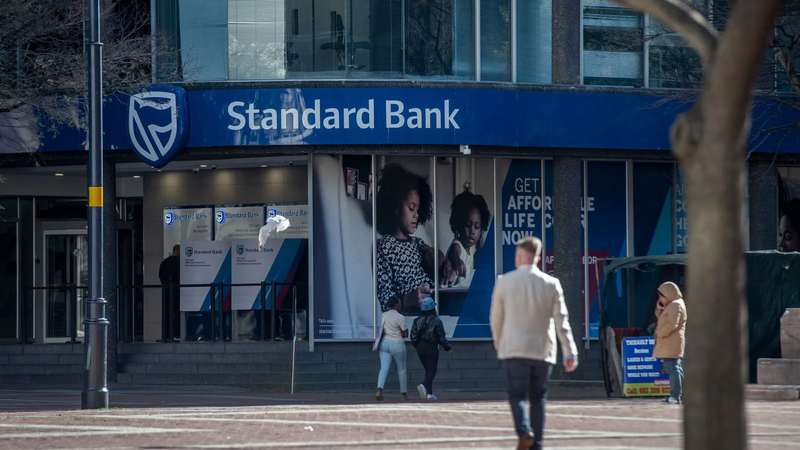
Dayalan Munsami, a Johannesburg man who owes Standard Bank over R3 million on his bond, has lost his bid to reverse the sale of his multi-million-rand mansion. The property was sold at a public auction for just R360,000 after the bank obtained a court order in 2019 due to Munsami’s significant arrears. The sale, which took place in June 2021, saw Hazel Irene Knowler purchasing the property, and the transfer was completed in November 2021. Munsami had defaulted on his bond payments, and the high court ruled in favor of the bank, granting a summary judgment and declaring the property executable. The bank argued that Munsami was unlikely to pay off the debt in a reasonable timeframe, and no alternative solutions could settle the outstanding amount. Despite being legally represented, Munsami failed to file an answering affidavit during the initial proceedings and did not present any defense against the summary judgment. After the auction, he refused to vacate the property, prompting Knowler to file an eviction application in February 2022.
Undeterred, Munsami filed an urgent application to the high court to have the sale overturned, arguing that the property had been sold without a reserve price and for far below its estimated value. He cited an automated valuation report that pegged the home’s worth between R3.38 million and R4.94 million, asserting that the property had been sold for a fraction of its actual value. However, the high court dismissed his application, noting that Munsami had legal representation during the initial proceedings and failed to raise any objections at that time. Unhappy with the ruling, Munsami appealed the decision to the Supreme Court of Appeal (SCA). At the SCA, Munsami argued that the property had been sold for a mere six percent of its approximate value of R6 million. He described the sale as “shocking and outrageous,” accusing the bank of bullying tactics and a lack of respect for court rules. However, Judge John Eldrid Smith, who presided over the case, found no evidence of bad faith on the part of the bank.
Judge Smith noted that Munsami only raised his objections after the sale and transfer of the property had been completed, and that he had numerous opportunities to challenge the summary judgment or request a delay in the sale. The judge emphasized that Munsami had failed to act in a timely manner and stated that he had “enough opportunities to challenge the summary judgment order or apply for the stay of the sale in execution.” The SCA dismissed Munisami’s appeal with costs, finding no reasonable prospects for success in the case. The ruling upheld the earlier decision, leaving Munsami without recourse to reverse the sale or regain ownership of his property.