


Cape Town, South Africa — November 2024
From November 4th to 9th, 2024, the 22 On Sloane Cape Town Hub became a hub of innovation, collaboration, and entrepreneurship as it hosted the Google Start-up Bootcamp. This event marked the first major ecosystem activity at the newly launched facility in Green Point and highlighted 22 On Sloane’s commitment to strengthening Africa’s dynamic start ups landscape. The Google Start-up Bootcamp was part of the Google for Start-ups Black Founders Fund, an initiative that has committed over $30 million (R545 million) in equity-free funding to empower Black-led start-ups worldwide. The week-long bootcamp brought together promising entrepreneurs from across the continent for transformative workshops, mentorship sessions, and networking opportunities. Participants refined their ideas, built valuable relationships, and laid the groundwork for scaling their ventures.
The programme is a testament to Google’s broader vision for Africa. Through initiatives like the Google for Start-ups Accelerator Africa, the Google for Start-ups Fund Africa, and the Google Developers Space, Google has made significant investments in supporting the growth of start-ups on the continent. To date, over 80 start-ups have participated in the Google for Start-ups Accelerator Africa, and more than $10 million has been invested through the Google for Start-ups Fund Africa, driving tangible progress in various sectors. Among the standout start-ups in the 2024 Google for Start-ups Accelerator Africa Black Founders Programme were:
- Mapha Logistics: Empowering township, peri-urban, and rural merchants with digital tools to streamline their operations.
- Breaze Delivery: An on-demand delivery platform connecting businesses with a network of drivers.
- Vuleka: An e-commerce and fintech platform bridging informal township businesses with customers through both online and offline channels.
These start-ups reflect the innovation and potential driving Africa’s entrepreneurial spirit. In the early stages of start-up development, access to capital can be one of the biggest hurdles. While pre-seed and seed investments are critical, they make up a small portion of total funding. This is where grant funding plays a crucial role. Grant funding provides essential support for early-stage founders, enabling them to validate their ideas, refine products, and test market reception. For example, initiatives like the Catalyst Fund offer grants to start-ups focused on refining their products and business models, while the Schmidt Futures Innovation Grants Programme supports innovative technology solutions addressing societal challenges. Additionally, grant funding is pivotal for testing Minimum Viable Products (MVPs), running surveys, focus groups, and conducting experiments—essential activities that many traditional investors may not immediately support. Programs like the GSMA’s Innovation Fund have helped mobile tech start-ups like Aquarech in Kenya and Crop2Cash in Nigeria to refine their models, validate products, and create sustainable impacts in underserved communities. By providing resources without requiring equity dilution, grant funding helps de-risk start-ups, allowing them to build more commercially viable businesses and attract further investments.
The Google for Start-ups Black Founders Fund and other grant programmes are essential tools for nurturing the growth of early-stage start-ups in Africa. They not only provide financial support but also offer the mentorship and networks that entrepreneurs need to thrive in a competitive market. Zinhle Mncube, Head of Business and Partnerships at 22 On Sloane, emphasized the importance of such initiatives, stating, “Through programmes like the Google Start-up Bootcamp, we are not only helping African start-ups]= grow but also contributing to the broader vision of building a thriving and inclusive start-up ecosystem across the continent.” As Africa continues to innovate and transform, initiatives like these will play a crucial role in unlocking the full potential of the continent’s entrepreneurs.
FlySafair embraces AI to enhance customer experience and streamline operations
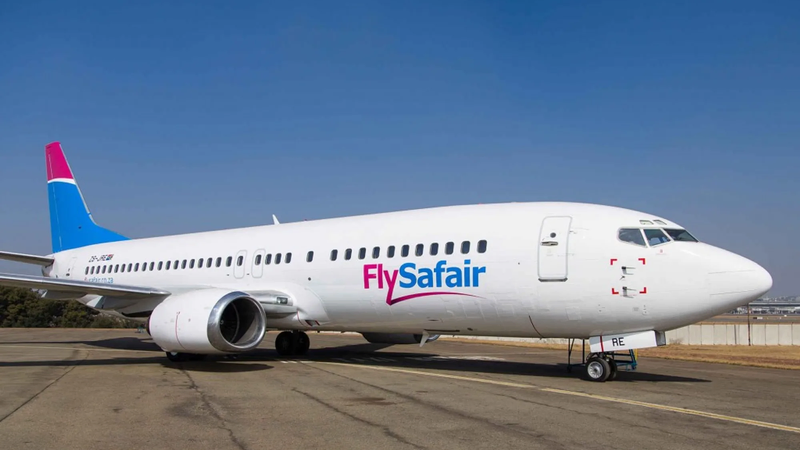
Cape Town, South Africa – December 2024
In a bid to enhance operational efficiency and improve the customer experience, FlySafair has turned to artificial intelligence (AI) as part of its broader strategy to innovate and stay ahead in the competitive domestic aviation market. The low-cost carrier has partnered with local UiPath Gold Partner, Datafinity, to introduce AI-powered automation, focusing on streamlining its flight booking and invoicing processes. FlySafair decision to adopt AI-driven automation comes after facing significant challenges due to the time-consuming, manual tasks involved in large group bookings and partner flight invoicing. By implementing seven key automation systems, the airline has significantly improved its efficiency across critical operations.
One of the most notable changes has been the transformation of the flight booking process. The airline’s automation efforts have drastically reduced the time needed to create large group bookings from 30 minutes to just five. This leap in efficiency enables travellers to begin their journey with a seamless and hassle-free booking experience. Beyond booking, FlySafair has also automated its invoicing system for partner flights, eliminating hours of manual work and ensuring that vital revenue streams are accurately and efficiently processed. These changes have allowed the airline to better allocate resources and optimize its operations. Eswee Vorster, FlySafair’s Executive Manager and CIO, highlighted the significance of these innovations in delivering a superior customer experience. “Running an airline means constant innovation, and innovation to me means doing the basics brilliantly, using technology to ensure people and processes work seamlessly,” he said.
Vorster further explained how the demonstration of a robot working at an exceptional speed was a turning point for the team. “We built a demonstration, which showed a robot at work in a sandbox environment. My colleagues could see it operating at incredible speed on the screen, using the same interface as a human, but so much faster. They were instantly sold on the idea,” he added. To foster a sense of pride and camaraderie among its employees, FlySafair named its robots “Hercules,” a nod to the airline’s legacy of heavy-lifting cargo planes. This initiative has helped smooth the transition to AI by cultivating acceptance among long-serving staff.
Currently, FlySafair boasts two autonomous robots, nicknamed Hercules, working across its automated systems, creating tangible value for the business. However, this is just the beginning. The airline plans to explore more complex back-office automation to further enhance operational efficiency and support its growth as it scales. As businesses across South Africa navigate economic uncertainty, FlySafair’s use of the UiPath Platform serves as an example of how automation can improve operational performance and create opportunities for growth. “We’re fortunate to have a culture that values innovation and improvement. It’s part of our DNA. When we speak to colleagues about new technology, they know it will improve their work, not threaten their job,” said Vorster. FlySafair’s AI-powered automation efforts not only promise a more efficient operational model but also signal a new era of streamlined, customer-focused service for travellers across South Africa.