

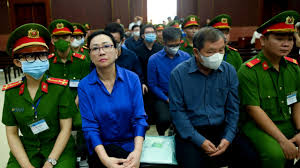
A high-profile fraud scandal involving one of Vietnam’s leading tycoons has brought systemic flaws in the country’s banking sector to the forefront, with analysts warning that more such cases could be lurking. The scandal centers on Truong My Lan, a property developer and former head of Saigon Commercial Bank (SCB), who was convicted earlier this year for embezzling billions of dollars from the bank she controlled. On Tuesday, a Vietnamese court upheld Lan’s death sentence, which she received after prosecutors accused her of causing $27 billion in losses—an amount equivalent to Bosnia’s entire GDP. The scale of the crime has shocked the nation and highlighted the deep-rooted corruption in the financial system, with Vietnam ranked 83rd out of 180 on Transparency International’s Corruption Perception Index.
Experts are concerned that SCB is not an isolated case but a symptom of broader systemic problems within Vietnam’s financial sector. “SCB is not a single problem; it is an illness of the whole economy,” said Bui Kien Thanh, a banking expert. The lack of strict state oversight and pervasive issues across various sectors mean that similar scandals could emerge unless the government addresses these vulnerabilities. One of the primary weaknesses is the regulation of the corporate bond market, where companies borrow money from the public. Unlike more developed markets, where bonds are independently regulated and rated, SCB sold bonds directly to retail customers, many of whom were misled into believing their investments were secure. Tens of thousands of people lost their savings when SCB collapsed, with some reportedly contemplating suicide.
Vietnam’s corporate bond market has been largely unregulated, with most company debt lacking any credit ratings. This starkly contrasts with other ASEAN countries, where roughly 50 percent of corporate bonds are rated for creditworthiness. Lan’s control over SCB was further complicated by her deceptive tactics. Although officially owning just 5 percent of the bank, the court found that she controlled over 90 percent of shares through family, friends, and loyal staff. She used this control to orchestrate massive withdrawals, reportedly transporting $4.4 billion in cash to her personal and business addresses. The scandal also revealed the depth of collusion within the financial system. Employees were complicit in carrying out these illicit transactions without questioning the paperwork, driven by personal gain and a system of corruption that allowed such practices to continue unchecked. One of the former top officials at the State Bank of Vietnam was even convicted for accepting a $5 million bribe to overlook financial irregularities at SCB.
The scandal has raised concerns among foreign investors, with some fearing that ongoing anti-corruption efforts could lead to a slowdown in state bureaucracy. Carl Thayer, emeritus professor at The University of New South Wales, cautioned that while anti-graft efforts are essential, they must be balanced with efficient decision-making processes to maintain investor confidence. Since the scandal broke, Vietnam has ramped up its anti-corruption measures. However, experts like Khuong Huu Loc, an economist based in the U.S., warn that while there may not be another case of such magnitude, the financial sector remains vulnerable, and smaller-scale frauds could be hiding in plain sight. “This is a game based on collusion,” said Loc, emphasizing that the lack of oversight and the ingrained culture of corruption make it difficult to prevent similar incidents from arising. “The question is how many more?” he added.
As the country grapples with the fallout of the SCB scandal, analysts argue that Vietnam must take extraordinary steps to overhaul its banking regulations and ensure greater transparency to prevent further financial crises.
China lifts final bans on Australian red meat as trade row nears end
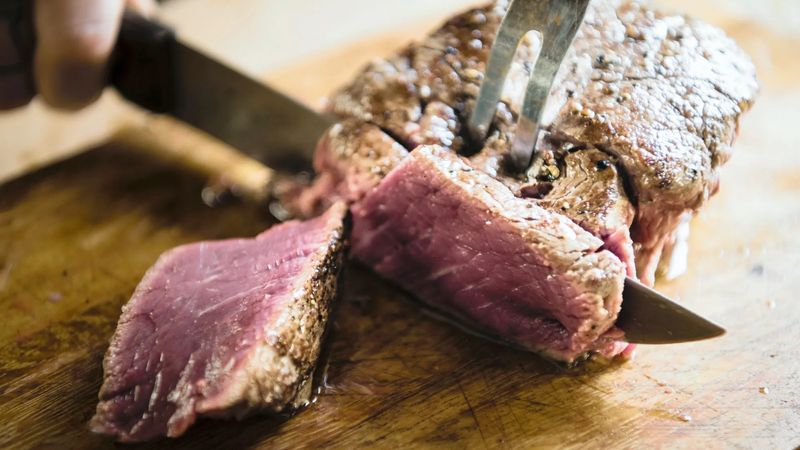
China has officially lifted its trade suspensions on Australian red meat, marking the resolution of one of the final barriers in a four-year trade dispute that severely impacted nearly US$13 billion worth of exports. Australia’s government confirmed the development on Tuesday, signaling the end of a long-running trade row that had disrupted key export sectors. The suspension of Australian red meat exports to China, which began in 2020, was part of a series of trade restrictions imposed by Beijing on Australian goods. The trade bans affected some of Australia’s most valuable commodities, including barley, wine, timber, and coal. However, as bilateral relations between the two countries have gradually improved over the past two years, Beijing has lifted tariffs and resumed imports of several Australian products, with red meat and lobster being the last remaining obstacles.
Australian Prime Minister Anthony Albanese hailed the move, stating that it cleared the way for the “full resumption of red meat exports” to China. He emphasized the significance of the trade reset, noting that the lifting of these restrictions would help Australian producers regain access to one of their largest markets. “We are close to the point where China’s trade impediments—which impacted Aus$20 billion worth of Australian exports—have all been removed,” Trade Minister Don Farrell said in a statement on Tuesday. In addition to the red meat trade, the Australian government announced in October that full lobster exports to China are expected to resume by the end of this year, further restoring trade between the two nations.
The lifting of these trade barriers comes as part of a broader effort to mend relations between China and Australia, which soured after Australia called for an independent inquiry into the origins of COVID-19 in 2020. In the years since, both countries have taken steps to rebuild economic ties, with China removing tariffs on Australian barley and wine, lifting the ban on timber, and resuming coal shipments. For Australian farmers and exporters, the restoration of red meat trade is seen as a major victory, given the importance of China as a key market for Australian beef and lamb. Before the trade disruptions, China was Australia’s largest beef export market. As trade continues to rebound, Australian officials are hopeful that further improvements in relations will provide a more stable and prosperous economic future for both nations.