
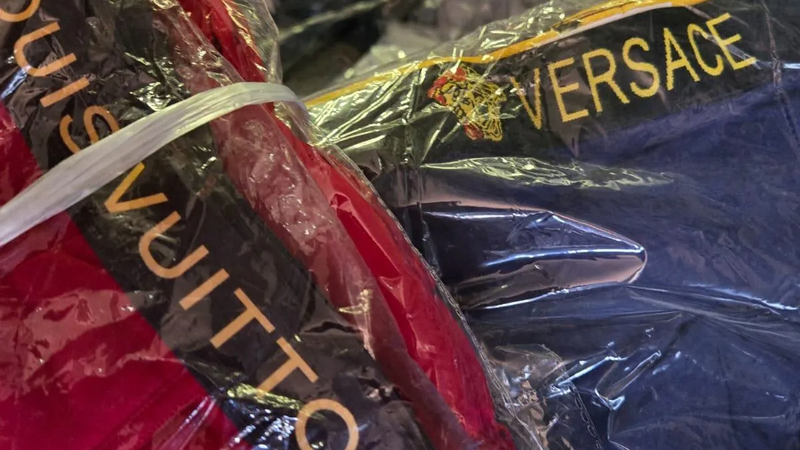
JOHANNESBURG, South Africa – In a major operation this week, police seized counterfeit and illicit goods valued at over R66 million in Johannesburg. The operation is part of the government’s intensified efforts to combat the sale of fake products that threaten consumer safety and the economy. Lieutenant Colonel Amanda van Wyk confirmed that the operation led to the arrest of four Malawian nationals for violations of the Immigration Act. The takedown involved a coordinated effort from various law enforcement agencies, including the national counterfeit goods unit, the Gauteng provincial counterfeit goods unit, SAPS’ operational response services, crime intelligence, commercial crime investigations, and the Department of Home Affairs. The South African Revenue Service (SARS), Department of Agriculture, Customs, private security, and brand protectors also played key roles in the operation.
The team executed a search and seizure warrant targeting a shopping mall and a self-storage facility located at the corner of Wemmer Jubilee and Heidelberg Roads in Johannesburg’s CBD on Tuesday. Over 190,000 counterfeit and illicit items were confiscated, including clothing, shoes, belts, cosmetics, cigarettes, and liquor. Notably, the haul also included dangerous illicit pharmaceuticals, such as skin lightening products, and bottles of illicit poison found in the storage facilities. The Department of Agriculture assisted the law enforcement team in identifying the illicit poisonous products, highlighting a growing concern over food-borne illnesses in the country. “The SAPS, along with its partners, is committed to eradicating the illegal trade in counterfeit and illicit goods to safeguard consumers, legitimate businesses, and the economy of this country,” said Van Wyk.
This operation underscores the government’s commitment to protecting the public from the harmful impact of counterfeit goods and strengthening the fight against illegal trade in South Africa.
Job losses as Tupperware shuts its South Africa operations end of December

JOHANNESBURG, South Africa – Iconic US food storage container company Tupperware has announced that it will be closing its operations in South Africa by the end of December 2024. This move follows the company’s bankruptcy filing in September, stemming from a significant decline in sales and worsening financial circumstances. Despite filing for bankruptcy, Tupperware’s assets were partially acquired by Party Products, a company formed by the company’s creditors, to assist Tupperware in its restructuring efforts. Party Products plans to focus on operating Tupperware in various international markets, including the US, Canada, Mexico, Brazil, China, Korea, India, and Malaysia.
However, the South African operations will not be part of the future strategy. Justin Korte, Head of Commercial at Tupperware, explained that following the bankruptcy and subsequent sale of certain assets, the South African business will not be included in the license being assumed by Party Products. “Tupperware South Africa will not be receiving equipment to continue manufacturing products, and there is only a limited quantity and range of stock available for sales to distributors,” said Korte. As a result of the uncertain future, Tupperware South Africa has issued Voluntary Severance Packages (VSP) to employees, with service terminating on December 31, 2024. Employees who do not accept the VSP will be laid off starting January 1, 2025.
Korte further stated that the company’s board of directors and management are awaiting final instructions from shareholders and are seeking legal advice on how to navigate the current situation. Tupperware South Africa’s closure marks the end of an era for the brand, which has been a staple in kitchens across the world for decades. The company’s decline in sales, combined with ongoing financial struggles, has led to its exit from the local market, leaving a significant impact on employees and distributors alike.