


Cape Town, South Africa – Matthew Lani, the man who captivated South Africa by pretending to be a medical doctor, is now homeless and living with his mother after his elaborate deception was uncovered. Lani, who previously gained fame on social media for his supposed expertise in HIV and AIDS, recently opened up about the scandal and his downfall in an exclusive interview with Lungelo Mdletshe on Engineer Your Life. In the candid conversation, Lani revealed that his desire for fame and fortune began early in his life. “When I was young, I knew that I wanted to become rich and famous,” he said, as he reflected on the events that led to his infamous impersonation of a doctor. Lani admitted that he initially pursued a degree in psychology at the University of Johannesburg, but dropped out after just a year. He then claimed to have enrolled in medical school at Wits University, though he did not complete his studies, explaining that his mother’s loss of employment prevented him from continuing his education.
“My mom was a domestic worker, and her employers were the ones who covered my tuition,” Lani said. However, after his mother’s job loss, his academic journey came to an abrupt halt, leading him down a path that would eventually see him impersonate a doctor. Lani went on to describe a tumultuous personal life, including a toxic relationship with a partner he accused of being narcissistic and abusive. He claimed the abuse started when he became financially dependent on his partner, a shift in the power dynamic that allegedly led to emotional and physical violence. During their five-year relationship, Lani accused his ex of being a serial cheater and said he contracted HIV as a result. “He confessed that he deliberately infected me,” Lani claimed. Despite the betrayal, he took legal action, launching both private prosecution and a civil case. He won R800,000 in damages, which he says his ex paid in full.
However, Lani confessed that instead of returning to medical school, he squandered the money. “I blew it,” he admitted. Lani’s descent into deception began after he claimed to have become an advanced HIV and AIDS clinician working with an NGO. He decided to leverage his social media presence, starting multiple accounts where he portrayed himself as Dr. Matthew, a medical professional. Lani said that the “Dr. Matthew” persona was part of his strategy to humanize and simplify HIV education. Using a stethoscope as part of his “character” aesthetic, Lani’s social media accounts quickly gained traction. He produced content that portrayed him in hospitals, claiming to educate people about HIV and AIDS. While Lani insisted that he did not intend to masquerade as a doctor, his social media posts and collaborations with brands led many to believe he was a qualified medical professional.
“I had a disclaimer saying I was not a medical doctor,” he argued. “But the brands and the people I worked with didn’t check that properly.” He even mocked the Department of Health‘s statement condemning him, saying, “I just laughed and took it as a joke.” Lani’s fabricated career began to unravel when the Department of Health issued a public warning about his fraudulent activities. In a bizarre turn, Lani claimed that security guards at a hospital injured him when he was lured there by the department. He said he was denied medical care after being coerced into writing a fake confession admitting to impersonating a doctor. “I was in excruciating pain, but they wouldn’t help me because I didn’t want to sign a confession,” Lani explained. “I wrote a fake name, a fake surname, and some random ID number. I was coerced into writing the confession, and I wasn’t aware I was being recorded.”
Following his arrest, Lani claimed he was denied antiretroviral (ARV) medication for his HIV and was subjected to harsh conditions in jail. “They didn’t give me food or water for two days,” he said, adding that the investigation against him was eventually closed, with the case file mysteriously “missing”. With his social media accounts seized and his public persona crumbling, Lani’s life has spiralled. “The adrenaline I got from social media is gone. I no longer have access to my accounts,” he said. “I’ve been removed from the NGO. I have nothing.” Lani and his mother are now living in a shelter. He says that despite his downfall, he plans to sue the Department of Health for what he describes as the defamation of his character. He is also working on a documentary that will shed light on his side of the story and explain how he became “Dr. Matthew.”
While Lani’s actions have shocked many, he maintains that he was misunderstood, blaming the system and others for his rise and fall. His story serves as a cautionary tale of the dangers of fame-seeking and deceit in the age of social media.
Have you seen him? Hawks hunt for man accused of stealing fuel from Transnet pipeline
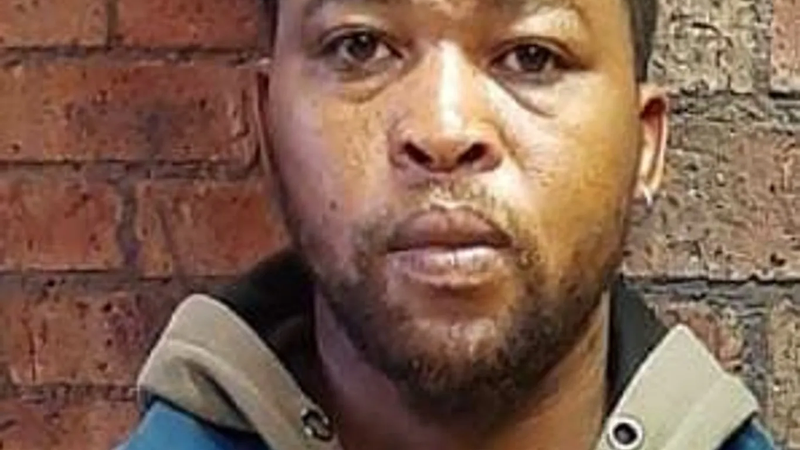
Gauteng, South Africa – The Palm Ridge Magistrate’s Court in Gauteng has sentenced Martin Siziba, 42, to six years in prison after he was found guilty of tampering with essential infrastructure and stealing fuel from a Transnet pipeline. Siziba, who was arrested by the Hawks (Directorate for Priority Crime Investigation), was apprehended in connection with an incident that occurred in December 2021. According to Captain Lloyd Ramovha, spokesperson for the Hawks in Gauteng, the case was initially registered at Brackendowns police station. On the day of the theft, Fidelity security officers apprehended Siziba and his accomplice, Mveliso Mvelo Vabaza, 31, who were found in possession of a white Isuzu vehicle containing stolen fuel. The fuel had been siphoned from the Transnet pipeline. “Fidelity security officers responded to a tip-off and stopped Siziba and Vabaza, who were found with a large quantity of stolen fuel,” Ramovha said. The vehicle and its contents were seized as evidence, and a case of tampering with essential infrastructure and theft of fuel was opened.
Although the initial court appearance did not result in immediate charges, further investigations led to the National Prosecuting Authority (NPA) issuing warrants of arrest for the suspects. On January 16, Siziba was arrested at Heidelberg prison and subsequently appeared before the Palm Ridge Magistrate’s Court. Facing overwhelming evidence, Siziba chose to plead guilty to the charges of theft. The court handed down a sentence of six years imprisonment, with two years suspended for five years on the condition that Siziba does not commit the same offense again. Additionally, he was declared unfit to possess a firearm, a significant penalty for his role in the crime. While Siziba has been sentenced, his accomplice, Mveliso Mvelo Vabaza, remains at large. Authorities have issued an appeal for information on Vabaza’s whereabouts. Captain Ramovha has urged the public to report any leads on his location to Captain Jabulane Radebe at 082 822 6749.
The Hawks emphasized the serious consequences of crimes like fuel theft and infrastructure tampering, particularly in relation to the environment and public resources. Major General Ebrahim Kadwa, provincial head of the Hawks in Gauteng, expressed concern over the potential environmental disasters that can result from such criminal activities. “Tampering with pipelines not only threatens our infrastructure but also endangers the environment, leading to costly clean-up efforts and straining public resources,” said Kadwa. He urged the public to remain vigilant and report any suspicious activities related to critical infrastructure. “Protecting our infrastructure is crucial for the stability of our economy and the well-being of future generations,” Kadwa added. In related news, the Thabazimbi Regional Court in Limpopo convicted two Zimbabwean nationals, Colin Mlambo (35) and Andile Alfonso Ndlovu (19), to 20 years in prison each for their involvement in tampering with Transnet’s copper cables. The two were also sentenced to additional charges of theft of copper cables and violations of the Immigration Act. The case involved the theft of 100 meters of overhead cable at Kilkenny train station, and their arrest came after security guards, tipped off about the theft, spotted the suspects in a vehicle at the scene.
With the sentencing of Siziba and other related cases, authorities hope to send a strong message that criminal activities targeting essential infrastructure will not be tolerated. The Hawks continue to investigate similar cases, emphasizing the need for stronger protection of South Africa’s critical resources.