

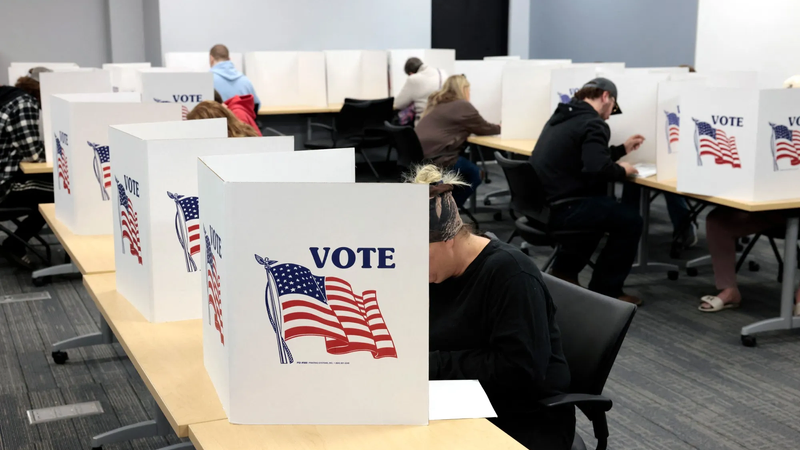
As Americans prepare to cast their ballots on Election Day, Tuesday, officials are urging voters to be patient, warning that it could take several days to determine the winner of what is shaping up to be a historically close presidential race. This year’s election, pitting Democratic Vice President Kamala Harris against her Republican rival Donald Trump, could see delays and complications in the vote tally, as legal challenges and recounts may arise. In the US, voters don’t directly select the president. Instead, their votes elect the Electoral College, a group of 538 electors who ultimately decide the president and vice president. The candidate who first reaches 270 Electoral College votes wins the presidency. Each state casts its electors’ votes based on the outcome of the popular vote in that state, with larger states receiving more Electoral College votes.
Both Harris and Trump are fiercely campaigning to secure the crucial 270 votes. However, experts warn that this year’s contest is so tight, it could take days to count all the ballots and resolve legal challenges. So far, over 81 million Americans have voted early, surpassing more than half of the total votes cast in the 2020 election. This surge in early voting is expected to play a significant role in the outcome. When Will We Know the Winner? The first polls close at 6 PM Eastern Time (1 AM SAST). However, in a tight race, it could take several days before a winner is projected, as local election officials count ballots, which can vary widely depending on location. In the 2020 election, media outlets declared Joe Biden the winner on November 7, five days after polling stations closed. But in previous years, such as 2016 and 2012, the wait was shorter.
Some states have made changes to their voting laws, allowing mail-in or overseas ballots to be counted ahead of Election Day. However, battleground states like Pennsylvania and Wisconsin have not made these changes, meaning votes from those areas may take longer to count, potentially slowing down the overall tally. In exceptionally close races, recounts could also delay the final results. Certification Process and Potential Delays, After votes are counted, local election officials certify the results, but the process is not official until it’s confirmed by the Electoral College. News outlets may call races based on their projections, but these are not the official results. States have until December 11 to certify their election results, and by December 25, the electoral certificates must be received by the President of the Senate, Kamala Harris, in her capacity as Vice President.
On January 6, Congress will count and confirm the Electoral College results, before the new president is inaugurated on January 20. However, experts are concerned about potential obstructions in the certification process. At least 22 county election officials in battleground states voted to delay certification in 2022, a number that represents a 30% increase from 2020. Additionally, 35 election officials have already refused to certify election results in the past, and they could do so again this year, according to Citizens for Responsibility and Ethics in Washington (CREW). This type of obstruction could further complicate the election process, pushing back key certification deadlines.
The 2020 election was marked by legal challenges from Trump and his allies, which were largely dismissed by the courts. With both parties preparing for more lawsuits this year, there are concerns that legal battles could further delay the official tally. As Americans head to the polls, officials are urging voters to remain patient, as this year’s election is expected to be a drawn-out process, with several days or even weeks potentially needed to confirm the final result.
Mark Lifman’s alleged killers make first court appearance
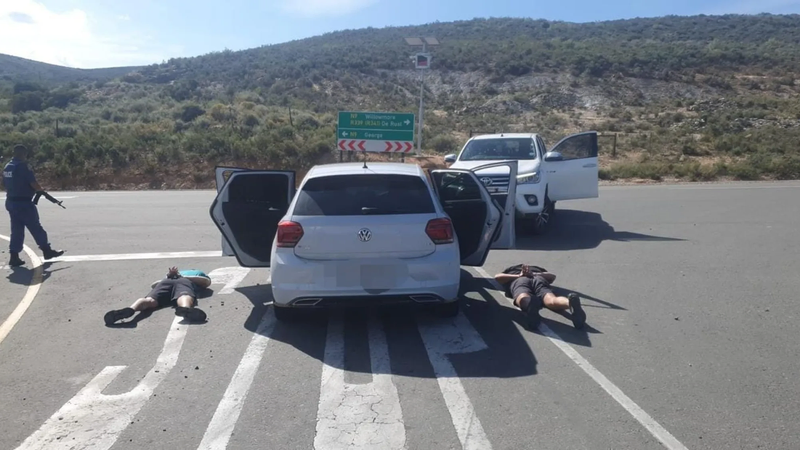
Two men arrested in connection with the murder of notorious underworld figure Mark Lifman made their first appearance in the George Magistrate’s Court on Tuesday. Johannes Jacobs, also known as Johnny, and Gert Bezuidenhout, were charged with Lifman’s murder following their arrest on Sunday. Lifman, a controversial businessman from Fresnaye, was shot dead in a parking lot at the Garden Route Mall in George, Western Cape, on Sunday. The attack sent shockwaves through Cape Town, raising questions about the motives behind the murder of the well-known figure in the underworld. During their court appearance, both suspects were seen wearing hoodies in the dock. The pair requested to be held in solitary confinement while their case was postponed to November 13 for a bail information hearing.
According to authorities, Lifman was allegedly lured to his death after receiving a call to meet someone at the Garden Route Mall, where he arrived without his bodyguards. The gunmen, driving a white VW Polo, shot Lifman at close range and fled the scene. Surveillance footage later revealed that the suspects changed the vehicle’s license plates before their arrest near Uniondale, a town located in the Western Cape. Police spokesperson Colonel Andre Traut confirmed the arrests, saying the two suspects were apprehended later on Sunday afternoon, just hours after the shooting. Their vehicle was also confiscated during the arrest.
Traut said: “In collaborative efforts to respond to crime and arrest perpetrators thereof, two suspects were questioned and are now charged with the murder of a 57-year-old man outside the Garden Route Mall in George. The pair, aged 37 and 53, were apprehended near Uniondale on Sunday afternoon, and the vehicle they were travelling in was also confiscated.” Following the shooting, a coordinated manhunt involving police, law enforcement, security companies, and crime watch groups was launched, leading to the suspects’ quick capture. The case has drawn significant attention due to Lifman’s connections to South Africa’s criminal underworld and the high-profile nature of his death.